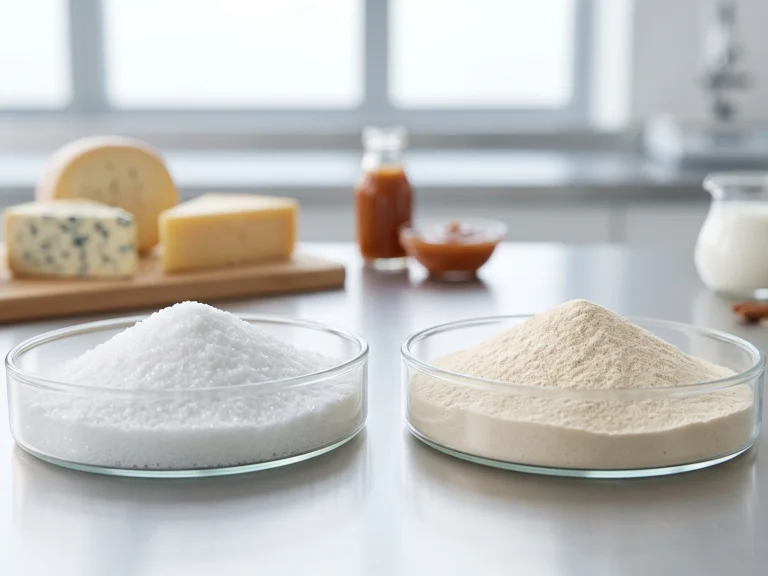
Calcium Propionate vs Potassium Sorbate: Which Preservative Is Better for Bakery Products?
Maintaining freshness, controlling mold growth, and extending shelf life are important goals for every bakery manufacturer. Calcium Propionate vs Potassium Sorbate are two commonly used food preservatives, but their performance differs depending on the product formulation, moisture content, acidity, and fermentation process.
This guide explains the main differences between calcium propionate and potassium sorbate and helps bakery manufacturers choose the most suitable preservative for bread, cakes, pastries, fillings, and other baked products.
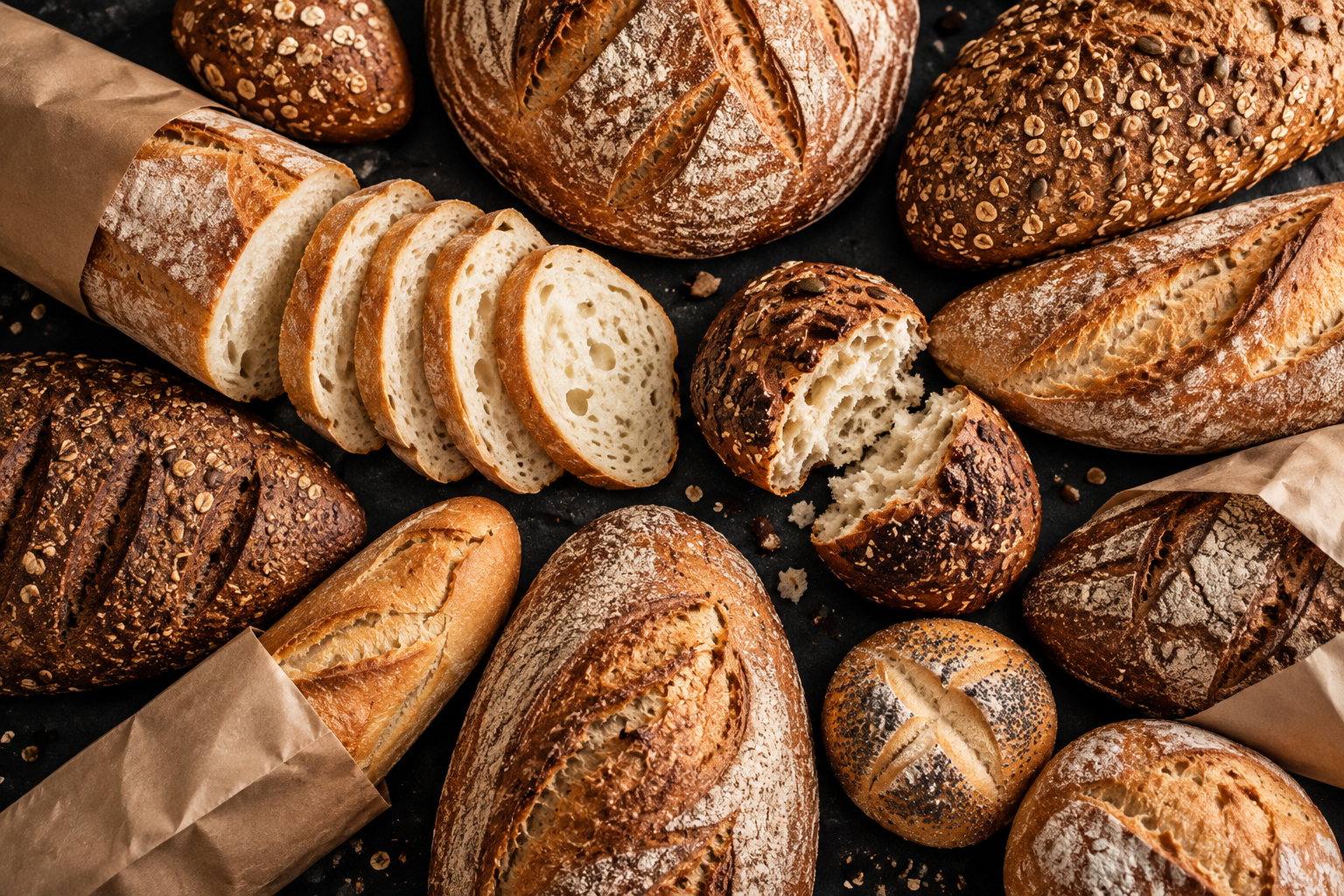
What Is Calcium Propionate?
Calcium propionate is the calcium salt of propionic acid. It is primarily used to inhibit mold growth and is especially suitable for yeast-fermented bakery products.
One of its main advantages is that, when used correctly, it generally provides mold protection without significantly interfering with baker’s yeast. This makes it a popular preservative in large-scale bread production.
Calcium propionate is commonly used in:
- Sliced bread
- Sandwich bread
- Hamburger buns
- Dinner rolls
- Tortillas
- Flatbreads
- Other yeast-raised bakery products
By slowing mold development, calcium propionate helps maintain product quality throughout storage, transportation, and retail display.
What Is Potassium Sorbate?
Potassium sorbate is the potassium salt of sorbic acid. It is widely used to control molds, yeasts, and certain other microorganisms in food products.
It has good water solubility and usually has little effect on the color, flavor, or aroma of the finished product when applied at an appropriate level. However, because it can inhibit yeast activity, it is generally better suited to bakery products that do not depend on active yeast fermentation.
Potassium sorbate is commonly used in:
- Cakes and muffins
- Pastries
- Fruit fillings
- Bakery glazes
- Cream fillings
- Cheesecakes
- Other high-moisture bakery products
Its effectiveness is usually stronger in acidic formulations, making it particularly useful in fruit-based fillings and similar products.
Calcium Propionate vs. Potassium Sorbate
| Comparison | Calcium Propionate | Potassium Sorbate |
|---|---|---|
| Main function | Primarily inhibits mold | Controls molds, yeasts, and certain other microorganisms |
| Effect on baker’s yeast | Generally compatible when properly used | May inhibit yeast fermentation |
| Suitable products | Bread, buns, rolls, tortillas, and yeast-raised products | Cakes, pastries, fillings, glazes, and moisture-rich products |
| Solubility | Moderate | Good |
| Performance conditions | Commonly used in bakery dough systems | Often performs better in acidic food systems |
| Typical application method | Added during dry ingredient or dough mixing | Added to the formulation, filling, glaze, or surface treatment |
| Typical use level | Often 0.2%–0.5% based on flour weight | Often 0.05%–0.2% based on total product weight |
The recommended dosage varies according to local food regulations, product pH, moisture content, processing conditions, packaging, and the required shelf life. Manufacturers should confirm the final dosage through laboratory and production trials.
Which Preservative Should You Choose?
The right choice depends mainly on whether the bakery product requires yeast fermentation.
Bread, Buns, and Yeast-Raised Products
Calcium propionate is generally the preferred option for bread, buns, rolls, and similar products. It helps prevent mold growth while allowing yeast fermentation to continue normally.
Using potassium sorbate directly in yeast-raised dough may slow fermentation, reduce dough expansion, and affect the texture of the finished product.
Cakes, Muffins, and Pastries
Potassium sorbate is often more suitable for cakes, muffins, and pastries that use chemical leavening rather than baker’s yeast. Its activity against both molds and yeasts provides useful protection for products with relatively high moisture content.
Fruit Fillings and Glazes
Potassium sorbate is commonly selected for fruit fillings, jams, glazes, and other acidic bakery components. Its antimicrobial performance is generally enhanced under acidic conditions.
Tortillas and Flatbreads
Calcium propionate is frequently used in tortillas and flatbreads to reduce mold spoilage during storage. However, the most suitable preservative system should also consider water activity, product pH, packaging, and distribution conditions.
Quick Selection Guide
| Bakery Product | Commonly Recommended Preservative | Main Reason |
|---|---|---|
| Sliced bread | Calcium Propionate | Controls mold without significantly affecting yeast fermentation |
| Hamburger buns | Calcium Propionate | Suitable for yeast-raised commercial production |
| Tortillas | Calcium Propionate | Helps extend mold-free shelf life |
| Cakes and muffins | Potassium Sorbate | Suitable for moist, non-yeast-leavened products |
| Pastries | Potassium Sorbate | Provides mold and yeast control |
| Fruit fillings | Potassium Sorbate | Works effectively in acidic formulations |
| Cream fillings | Potassium Sorbate | Helps protect moisture-rich bakery components |
Factors That Affect Preservative Performance
Selecting a preservative based only on the product name may not provide the best result. Several formulation and processing factors can influence its effectiveness.
Product pH
Both preservatives are influenced by acidity. Potassium sorbate is generally more effective in acidic food systems. Calcium propionate also performs better when enough active propionic acid is available in the formulation.
Moisture and Water Activity
Bakery products with higher available moisture are more vulnerable to microbial spoilage. Cakes, fillings, and cream-based products may therefore require a different preservation strategy from dry biscuits or low-moisture baked goods.
Fermentation Requirements
If active yeast fermentation is required, the preservative must be selected carefully. Calcium propionate is normally more suitable for yeast-raised dough, while potassium sorbate may reduce yeast activity.
Packaging Conditions
Preservatives work best as part of a complete shelf-life system. Hygienic production, suitable packaging, moisture control, storage temperature, and protection from post-baking contamination are also important.
Target Shelf Life
The correct preservative and dosage depend on how long the product must remain stable and under what distribution conditions. Shelf-life and microbial challenge testing should be carried out before commercial production.
How Are They Added to Bakery Products?
Calcium propionate is usually added as a dry ingredient during flour blending or dough mixing. Even distribution throughout the dough is important for consistent mold control.
Potassium sorbate may be dissolved in water before use or added directly to suitable formulations. It can be incorporated into cake batter, fruit filling, glaze, cream filling, or other non-fermented bakery components.
The application method should be adjusted according to the product formulation and manufacturing process.
Can Calcium Propionate and Potassium Sorbate Be Used Together?
In some bakery formulations, the two preservatives may be used as part of a combined preservation system. However, the combination must be evaluated carefully, particularly when baker’s yeast is involved.
The effectiveness of a combined system depends on:
- Product pH
- Water activity
- Fermentation method
- Microbial risks
- Processing temperature
- Packaging
- Storage conditions
- Applicable food regulations
Manufacturers should perform production trials rather than assuming that a higher preservative level will automatically produce a longer shelf life.
Common Selection Mistakes
One common mistake is treating calcium propionate and potassium sorbate as interchangeable preservatives. Although both can control mold, their effects on yeast and their preferred application conditions are different.
Another mistake is relying entirely on preservatives while overlooking sanitation, packaging, cooling, and storage. Preservatives cannot compensate for poor production hygiene or serious post-baking contamination.
Excessive preservative use should also be avoided. It may affect flavor, fermentation performance, product labeling, and regulatory compliance without delivering a proportional improvement in shelf life.
Conclusion
Calcium propionate and potassium sorbate are both effective bakery preservatives, but they are suited to different applications.
Calcium propionate is generally the better choice for bread, buns, tortillas, and other yeast-raised products because it controls mold while remaining compatible with normal fermentation.
Potassium sorbate is more suitable for cakes, pastries, fruit fillings, glazes, and other moisture-rich products where active yeast fermentation is not required. It offers broader control against molds and yeasts and performs particularly well in acidic formulations.
For the best results, manufacturers should consider the complete formulation, including pH, moisture, processing method, packaging, local regulations, and target shelf life.
Blue Wise supplies food-grade Calcium Propionate and Potassium Sorbate for bakery and food manufacturing applications. With stable product quality, reliable bulk supply, competitive pricing, and professional service, Blue Wise supports food manufacturers in selecting ingredients that meet their production and formulation requirements.
Contact Blue Wise for product specifications, samples, quotations, packaging information, or technical assistance.
Frequently Asked Questions
Is calcium propionate or potassium sorbate better for bread?
Calcium propionate is generally more suitable for bread and other yeast-raised bakery products. It helps control mold growth without significantly interfering with normal yeast fermentation when properly used.
Why is potassium sorbate not commonly added to yeast bread?
Potassium sorbate can inhibit baker’s yeast. Direct addition to yeast-leavened dough may slow fermentation and affect dough expansion, volume, and texture.
Which preservative is suitable for cakes?
Potassium sorbate is commonly used in cakes, muffins, and similar products, especially when they contain relatively high moisture and do not require active yeast fermentation.
What is the best preservative for fruit fillings?
Potassium sorbate is frequently selected for fruit fillings because it controls molds and yeasts and performs effectively in acidic formulations.
How does calcium propionate extend bread shelf life?
Calcium propionate slows mold growth during storage and distribution. This helps extend the mold-free period of packaged bread and reduces product spoilage.
Can calcium propionate and potassium sorbate be combined?
They may be combined in certain formulations, but compatibility with fermentation and local regulations must be considered. Laboratory evaluation, microbial testing, and production trials are recommended.
Do preservatives guarantee a specific shelf life?
No. Shelf life also depends on hygiene, moisture, pH, packaging, cooling, storage temperature, and contamination after baking. Preservatives should be used as part of a complete food-safety and shelf-life management system.