US Tariffs on Indian Citric Acid: AD/CVD Impact
Key Takeaways at a Glance
- US Import Pressure: Preliminary U.S. AD/CVD measures have significantly changed the landed-cost economics of Indian-origin citric acid and citrate salts.
- Global Spillover: Some Indian-origin supply may seek alternative markets, potentially increasing competition and price volatility outside the United States.
- Alternative-Origin Competition: Rising U.S. demand for alternative sources could affect supplier allocation, lead times, and availability in other regions.
- Customs Compliance: Third-country routing does not automatically change country of origin. Buyers should maintain transparent manufacturing and supply-chain documentation.
- Strategic Realignment: Separate U.S. and non-U.S. procurement strategies while maintaining qualified alternative sources for critical raw materials.
The global citric acid supply chain is entering a period of adjustment.
In August 2026, the U.S. Department of Commerce announced a preliminary affirmative antidumping (AD) determination on citric acid and certain citrate salts from India, with preliminary dumping margins ranging from 100.21% to 151.73%. India had previously received a preliminary countervailing duty (CVD) rate of 63.88%. After subsidy offsets, the preliminary adjusted cash-deposit rates for the two Indian AD categories are 98.22% and 149.74%.
These are preliminary determinations, not final trade-remedy orders. However, they have already changed the economics of Indian-origin supply to the U.S. and created a broader procurement question:
What happens when a major producing origin suddenly becomes significantly less competitive in one of the world’s largest importing markets?
For U.S. buyers, the immediate issue is the landed cost of Indian-origin material. For buyers elsewhere, the more important issue may be what happens next to production capacity, trade flows, alternative origins, and regional availability.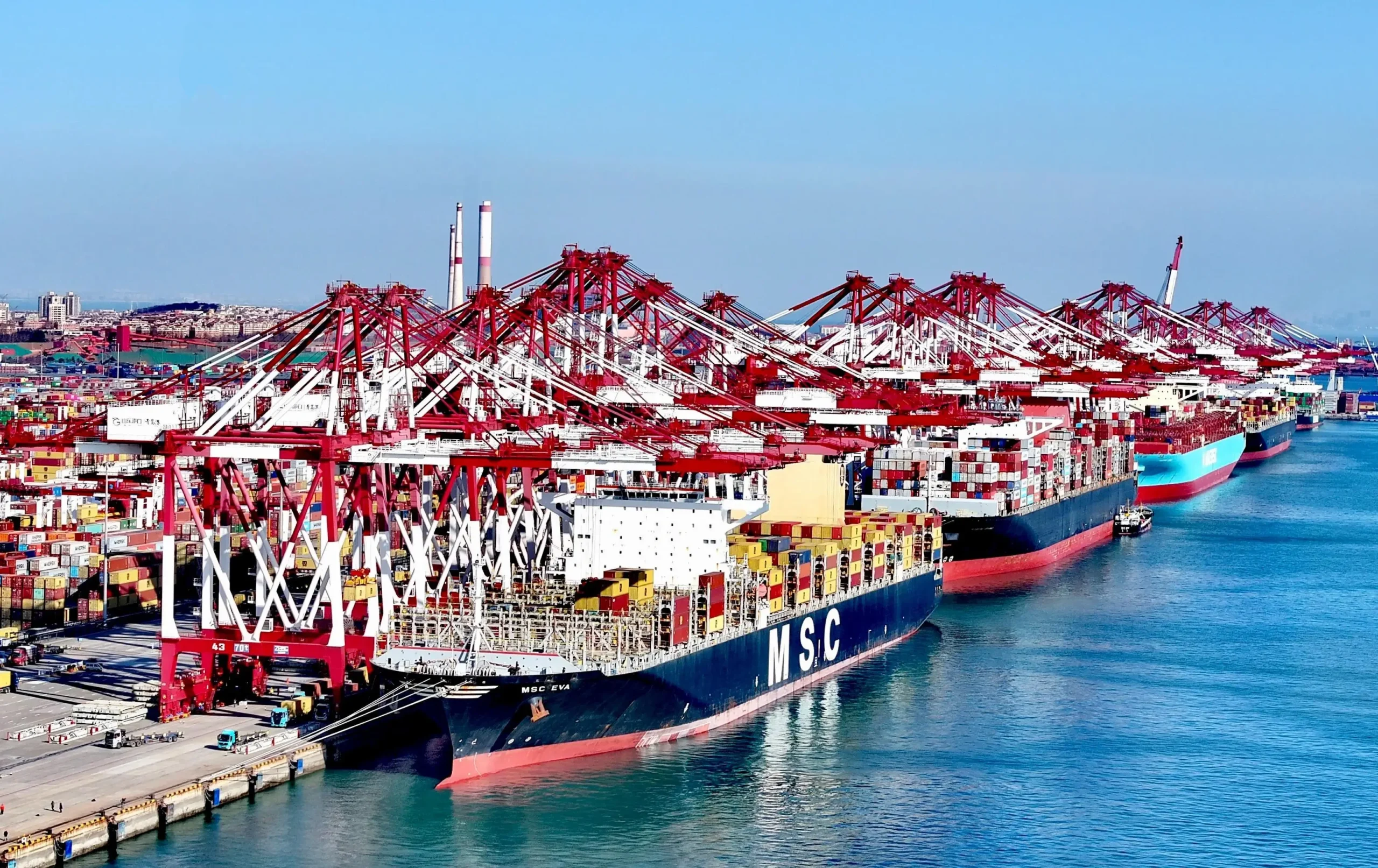
The Bigger Issue Is Not Just the U.S. Market
Trade remedies are often viewed as a country-specific problem. In practice, their effects can spread well beyond the market where the duties are imposed.
Citric acid is a globally traded commodity with large-scale fermentation production concentrated in a relatively limited number of countries. When the economics of one origin change sharply, producers, distributors, and multinational buyers have to reconsider where material should be produced, sold, and consumed.
That does not mean that all Indian-origin volume will suddenly move into other markets. Producers may adjust production schedules, domestic sales, inventories, customer allocations, or pricing strategies instead.
But one consequence is worth watching closely:
Some Indian-origin supply may increasingly compete for customers outside the United States.
That could create additional pricing pressure in some markets. At the same time, U.S. buyers will naturally look for alternative origins, potentially increasing competition for suppliers that remain commercially viable for the North American market.
This creates a more complicated global picture than simply “India loses the U.S. market.”
Where Could the Supply Chain Ripple Next?
The most important question for procurement teams is not whether supply will move, but how global supply allocation may change.
Several outcomes are possible.
- More competition in non-U.S. markets: Indian producers may seek additional demand in Europe, Latin America, the Middle East, and Asia-Pacific.
- Greater competition for alternative origins: U.S. buyers may increase demand for suppliers from countries that can serve the U.S. market under more favorable trade conditions.
- Regional allocation changes: Suppliers may prioritize markets offering stronger netbacks, potentially changing availability for existing customers.
- Higher price volatility: Spot prices may respond faster than long-term contracts as buyers and sellers reassess origin economics.
- Longer qualification cycles: Manufacturers switching origins may need additional technical, regulatory, and quality approvals before changing suppliers.
The result is a supply chain that may become more fragmented rather than simply more expensive.
The Hidden Risk: Competition for Alternative Origins
One of the most important second-order effects may occur outside India and the United States.
If U.S. buyers begin competing more aggressively for alternative-origin citric acid, suppliers serving multiple regions may have an incentive to allocate more capacity toward North America.
For buyers in Europe, Latin America, the Middle East, and Asia-Pacific, this could translate into tighter availability, longer lead times, or less attractive spot-market pricing—even though their own countries have not imposed new duties on Indian citric acid.
This is why procurement teams should avoid looking at the tariff issue purely through a country-to-country lens.
The real issue is global capacity allocation.
A supplier that looks readily available today may have a very different allocation policy six months from now if demand from another region becomes significantly more profitable.
Why the Cheapest Spot Price May Not Be the Best Option
A sudden increase in available supply can create attractive spot prices. That can be useful for buyers, but a low quotation should not automatically be interpreted as a sustainable procurement advantage.
When evaluating a new or aggressively priced source, procurement teams should look beyond the initial price and examine:
- Specification consistency: Can the supplier maintain the required purity, particle characteristics, moisture, and other agreed parameters across multiple batches?
- Production capacity: Is the quoted volume supported by actual manufacturing capacity rather than short-term inventory?
- Documentation: Are certificates of analysis, product specifications, origin documents, and other required records consistently available?
- Supply continuity: Can the supplier maintain allocations if market prices or freight costs change?
- Qualification requirements: Can the material pass the buyer’s technical and regulatory approval process before commercial volumes are committed?
For industrial and food-grade acidulants, the lowest price per metric ton is only one part of the total procurement equation.
A cheaper material that creates qualification delays, inconsistent batches, or supply interruptions can quickly become the more expensive option.
Do Not Confuse Third-Country Routing With a Change of Origin
High tariffs inevitably create interest in alternative trade routes. This is where procurement teams need to be particularly careful.
Shipping merchandise through a third country does not automatically change its country of origin. Repacking, relabeling, or changing shipping documents is not the same as legally transforming the origin of a product.
U.S. Customs and Border Protection has an established enforcement framework under the Enforce and Protect Act (EAPA) for investigating allegations of antidumping and countervailing duty evasion. CBP has previously taken action in cases involving alleged transshipment through third countries, including Thailand.
For buyers, the practical lesson is straightforward:
Do not build a procurement strategy around an uncertain origin structure simply because it produces a lower apparent tariff.
Instead, establish a clear chain of custody from the actual manufacturing facility through export documentation, logistics records, and import entry documentation.
For any alternative-origin program, buyers should be able to answer a basic question:
Where was the product actually manufactured, and can that origin be independently documented?
A Practical Sourcing Strategy for Global Buyers
1. Separate U.S. and Non-U.S. Procurement Decisions
Multinational companies should avoid assuming that one global sourcing strategy will remain optimal across every market.
For U.S. facilities, procurement teams should evaluate applicable AD/CVD exposure, customs requirements, and legally verified origins before committing to a supplier.
For non-U.S. facilities, the optimal sourcing strategy may be very different. Buyers should compare origins based on the complete landed cost, supply reliability, regulatory requirements, lead time, and long-term availability in the destination market.
2. Build More Than One Qualified Supply Option
Supply diversification does not necessarily mean maintaining five suppliers for every product.
A more practical approach is to establish at least one qualified secondary source before a disruption becomes urgent.
This can include:
- A primary supplier for normal-volume procurement.
- A qualified secondary supplier for contingency volume.
- Pre-approved specifications and documentation requirements.
- Periodic supplier audits or production verification.
- A clear process for switching origins when market conditions change.
The goal is not to eliminate price competition. It is to avoid becoming dependent on a single origin when trade policy can change the economics of that origin almost overnight.
3. Evaluate Suppliers on Manufacturing Depth, Not Just Trading Capability
During periods of supply-chain uncertainty, direct relationships with established manufacturers can provide an important advantage.
Procurement teams should look for suppliers that can demonstrate:
- Stable and scalable production capacity.
- Consistent batch quality.
- Transparent manufacturing origin.
- Reliable export documentation.
- Established quality-control procedures.
- The ability to support long-term commercial commitments.
This is particularly important for manufacturers using citric acid continuously in food, beverage, pharmaceutical, cleaning, or industrial formulations. Changing suppliers is rarely as simple as changing the price on a purchase order.
4. Watch Allocation, Not Just Price
During a volatile market, procurement teams often monitor weekly or monthly price movements. That is useful, but allocation can be equally important.
A supplier may offer an attractive price today but have limited capacity available when demand changes.
For strategic raw materials, buyers should therefore monitor:
- Available production capacity.
- Contract versus spot-market allocation.
- Lead-time changes.
- Regional demand shifts.
- Changes in supplier export priorities.
In other words, availability is part of the price.
What This Means for Chinese Citric Acid Supply
For buyers outside the United States, Chinese-origin citric acid remains an important sourcing option because China has a large-scale and mature citric acid manufacturing base.
However, the lesson from the current India trade case should not be “replace one country dependency with another.”
The better lesson is to evaluate each origin according to the destination market and build a sourcing structure that can adapt when trade policy changes.
For non-U.S. production facilities, direct procurement of citric acid anhydrous and citric acid monohydrate from established Chinese manufacturers can provide a competitive combination of production scale, export experience, and predictable supply—provided that the supplier is properly qualified for the buyer’s application and destination market.
For U.S. buyers, the calculation is different. Any Chinese-origin sourcing strategy must be evaluated against the specific U.S. tariff, customs, and trade-remedy environment applicable to the product and origin at the time of import.
There is no single “best origin” for every market.
The right question is: Which origin provides the best combination of landed cost, compliance, quality, availability, and supply continuity for this specific destination?
What Procurement Teams Should Do Now
The current U.S. action against Indian citric acid is still at the preliminary stage, so buyers should continue monitoring the final determinations and any subsequent developments.
At the same time, there is little reason to wait for a final decision before reviewing supply-chain exposure.
For procurement teams, a practical checklist is:
- Map current sourcing by origin and destination.
- Identify which facilities depend heavily on a single country of origin.
- Review alternative origins before an urgent shortage develops.
- Qualify secondary suppliers technically and commercially.
- Verify manufacturing origin and maintain complete documentation.
- Monitor both price and supplier allocation trends.
- Separate U.S. sourcing decisions from non-U.S. sourcing decisions where necessary.
Looking Beyond the Tariff
The most important lesson from the current U.S. action against Indian citric acid is not simply that tariffs can increase import costs.
It is that trade policy can change the economic geography of an entire supply chain.
When one major origin becomes less competitive in one market, production does not simply disappear. Buyers search for alternatives. Suppliers reconsider allocation. Other regions compete for the same capacity. Prices, lead times, and availability can all change as a result.
For global food and ingredient manufacturers, the most resilient response is therefore not to chase the lowest temporary quotation.
It is to build a sourcing structure based on qualified origins, transparent documentation, reliable manufacturing capacity, and the flexibility to adapt when trade conditions change.
How Niran Bio Supports Global Citric Acid Sourcing
At Niran Bio, we believe reliable ingredient sourcing starts with manufacturing transparency and long-term supply planning—not simply a low spot-market quotation.
For customers outside the United States, our team can support sourcing discussions around citric acid anhydrous, citric acid monohydrate, and trisodium citrate dihydrate from established Chinese production capacity, including specification matching, documentation review, commercial planning, and long-term supply coordination.
Our objective is straightforward: help buyers evaluate supply options based on the complete procurement picture rather than price alone.
If your company is reviewing citric acid sourcing, reallocating supplier volumes, or assessing exposure to current trade-policy changes, our team can provide a practical discussion of available sourcing options for your target market.