Sweeteners Guide: Classification and Sweetness Comparison
This article provides a comprehensive overview of food sweeteners, including their classification, sweetness intensity, functional properties, and applications in modern food and beverage formulation.
Sweeteners are not only used to provide sweetness. Depending on their chemical structure and functional characteristics, they can also contribute to bulking, moisture retention, browning, texture improvement, digestive health benefits, and sugar reduction strategies.
Understanding the differences among sweetener categories helps food manufacturers, product developers, and procurement teams select the most suitable ingredients for specific formulation requirements.
Sweetener Sweetness Comparison Chart
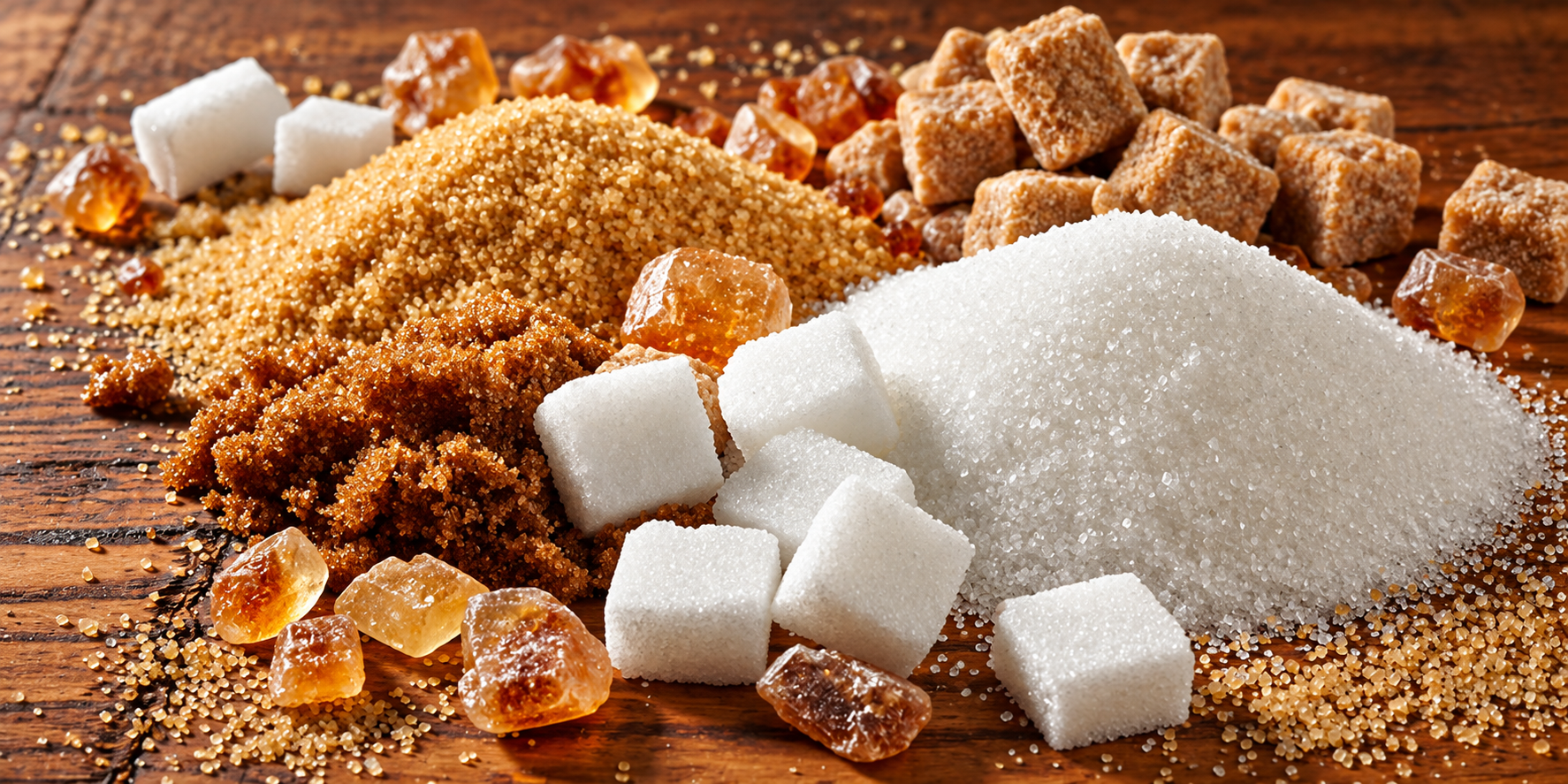
The sweetness intensity of different sweeteners varies significantly. While sucrose is commonly used as the reference standard (sweetness value = 1), high-intensity sweeteners can provide hundreds or thousands of times more sweetness at extremely low usage levels.
| Sweetener Category | Typical Sweetness Compared with Sucrose | Main Functional Role |
|---|---|---|
| Sugars | 0.4–1.0× | Sweetness, browning, flavor development, bulk |
| Sugar Alcohols (Polyols) | 0.3–0.9× | Reduced-calorie sweetness, texture, moisture retention |
| Oligosaccharides | 0.1–0.6× | Prebiotic benefits, fiber enrichment, mouthfeel improvement |
| High-Intensity Sweeteners | 30–13,000× | Low-dose sweetness enhancement and sugar reduction |
| Rare Sugars | 0.5–0.7× | Sugar-like functionality with reduced calories |
Note: Sweetness values vary depending on concentration, temperature, pH, and food matrix. Data are commonly compared against a 10% sucrose solution at 20°C.
Monosaccharides (Single Sugars)
Monosaccharides are the simplest carbohydrate structures and serve as building blocks for many food ingredients. They provide clean sweetness, rapid energy availability, and functional properties in beverages, bakery products, and nutritional formulations.
| Sweetener | Sweetness (Sucrose = 1) | Characteristics |
|---|---|---|
| D-Xylose | 0.4 | Provides mild sweetness and is used in specialized nutritional and functional food applications. |
| Dextrose Monohydrate | 0.7–0.8 | A glucose-based ingredient widely used in beverages, bakery products, and nutrition formulations. |
Disaccharides (Double Sugars)
Disaccharides consist of two monosaccharide units. Besides sweetness, they contribute important functional properties including browning reactions, flavor development, and moisture retention.
| Sweetener | Sweetness | Characteristics |
|---|---|---|
| Malt Extract | 0.4–0.6 | Provides mild sweetness and characteristic malt flavor for bakery products, beverages, and nutritional foods. |
Oligosaccharides (3–9 Monosaccharides)
Oligosaccharides provide relatively low sweetness but deliver valuable functional benefits. They are widely used in functional foods, dairy products, beverages, and nutrition products to improve fiber content, support digestive health, and enhance mouthfeel.
| Sweetener | Sweetness | Characteristics |
|---|---|---|
| Fructooligosaccharides (FOS) | 0.3–0.6 | Prebiotic ingredient that supports gut health and provides mild sweetness. |
| Galactooligosaccharide (GOS) | 0.3–0.6 | Widely used in dairy nutrition and infant formula applications. |
| Isomaltooligosaccharide (IMO) | 0.4–0.6 | Low-GI carbohydrate used in nutrition bars, bakery, and functional foods. |
| Resistant Dextrin | 0.1–0.2 | Soluble dietary fiber that improves mouthfeel and nutritional value. |
Functional Carbohydrates and Bulking Ingredients
Some carbohydrate-based ingredients provide limited sweetness but play important roles in food formulation. They are commonly used to improve texture, powder flowability, stability, and mouthfeel in dry mixes, beverages, and nutritional products.
- Maltodextrin Powder – A neutral-tasting bulking ingredient used for texture improvement, carrier applications, and flavor delivery.
- Starch – Primarily used as a texturizing and thickening ingredient rather than a sweetener.
Sugar Alcohols (Polyols)
Sugar alcohols are widely used in reduced-sugar and sugar-free products because they provide sweetness with fewer calories than sucrose while contributing important physical properties such as moisture retention, cooling sensation, and texture improvement.
| Polyol | Sweetness | Characteristics |
|---|---|---|
| Erythritol | 0.6–0.7 | Zero-calorie polyol with clean sweetness and cooling effect. |
| Sorbitol | 0.5–0.6 | Provides moisture retention and smooth sweetness in food applications. |
| Maltitol | 0.75–0.9 | Sugar-like sweetness commonly used in confectionery and reduced-sugar products. |
High-Intensity Sweeteners
High-intensity sweeteners provide extremely strong sweetness at very low usage levels, making them essential ingredients in reduced-sugar beverages, tabletop sweeteners, dairy products, and functional foods.
Because these sweeteners have different taste profiles, stability characteristics, and regulatory approvals, manufacturers often combine multiple high-intensity sweeteners or pair them with bulking ingredients to achieve a balanced sweetness profile.
| Sweetener | Sweetness | Characteristics |
|---|---|---|
| Acesulfame Potassium (Ace-K) | 200× | Excellent heat stability; commonly used in beverages, dairy products, and bakery applications. |
| Aspartame | 180–200× | Provides a sugar-like taste profile and is widely used in soft drinks and tabletop sweeteners. |
| Sucralose | 600× | High stability under heat and acidic conditions; suitable for a wide range of food and beverage systems. |
| Neotame | 7,000–13,000× | Ultra-high sweetness intensity and effective at extremely low dosage levels. |
| Sodium Saccharin | 300–500× | Highly stable sweetener commonly used in beverage and tabletop applications. |
| Sodium Cyclamate | 30–50× | Economical sweetener often combined with other sweeteners in blended systems. |
Natural High-Intensity Sweeteners and Rare Sugars
Natural sweeteners have gained increasing attention as food manufacturers respond to consumer demand for clean-label, plant-based, and reduced-calorie products.
Ingredients such as stevia, monk fruit extract, and allulose allow manufacturers to reduce sugar content while maintaining sweetness and improving nutritional positioning.
| Sweetener | Sweetness | Source / Characteristics |
|---|---|---|
| Stevia Extract | 200–300× | Plant-derived high-intensity sweetener with zero calories and clean-label positioning. |
| Monk Fruit Extract | 150–200× | Natural sweetener with low glycemic impact and a smooth sweetness profile. |
| Allulose | 0.64 | Rare sugar providing sugar-like functionality with significantly reduced calories. |
Sweetener Blends: Optimizing Taste, Texture, and Cost
Modern food and beverage formulations increasingly rely on sweetener blends rather than a single sweetener ingredient.
Combining different sweetener categories allows manufacturers to overcome individual limitations and create a sweetness profile closer to sucrose while improving formulation performance.
- Flavor Optimization and Aftertaste Reduction:
High-intensity sweeteners such as stevia, sucralose, or acesulfame potassium may create bitter or lingering notes at higher usage levels. Combining them with polyols or rare sugars can improve taste balance. - Sweetness Synergy and Cost Optimization:
Certain combinations, such as aspartame with acesulfame-K or stevia with sucralose, provide enhanced sweetness perception and allow manufacturers to reduce total sweetener usage. - Texture and Mouthfeel Improvement:
High-intensity sweeteners provide sweetness but cannot replace the physical bulk of sugar. Ingredients such as erythritol, maltodextrin, and dietary fibers help restore body and texture. - Processing Stability:
Combining sweeteners with different heat and pH stability characteristics helps maintain consistent sweetness throughout processing and storage.How to Choose the Right Sweetener for Food Formulation
Selecting the optimal sweetener depends on more than sweetness intensity. Food manufacturers must evaluate taste profile, processing conditions, nutritional targets, regulatory requirements, and the final product matrix.
Beverages
For beverages, key considerations include solubility, acid stability, aftertaste control, and sweetness consistency during storage.
Common choices include:
- Stevia and monk fruit extract for clean-label positioning
- Sucralose and acesulfame potassium for strong sweetness and stability
- Sweetener blends for improved sensory performance
Bakery Products
Bakery applications require sweeteners that contribute not only sweetness but also moisture control, texture, browning, and bulk.
Common choices include:
- Maltitol and erythritol for sugar reduction
- Maltodextrin for texture and bulk improvement
- Blended systems for balanced sweetness and mouthfeel
Dairy and Functional Nutrition Products
Dairy and nutrition products often require sweeteners that support health positioning while maintaining taste quality.
Common choices include:
- FOS and GOS for prebiotic functionality
- Stevia and monk fruit extract for low-calorie formulations
- Allulose for sugar-like sweetness with reduced calories
Reduced-Sugar and Sugar-Free Products
Sugar reduction projects typically require a combination approach because replacing sucrose affects sweetness, texture, and consumer perception simultaneously.
Successful formulations often combine high-intensity sweeteners with polyols, fibers, or rare sugars to replicate the functionality of traditional sugar.
Key Factors When Selecting a Sweetener Supplier
For industrial food manufacturers, ingredient selection is only part of the decision. A reliable sweetener supplier should provide consistent quality, regulatory documentation, and technical support throughout product development and commercial production.
- Specification Consistency:
Batch-to-batch sweetness, purity, moisture content, and particle size consistency are essential for stable production. - Regulatory Documentation:
COA, technical data sheets, food safety certifications, and compliance documents support global market access. - Application Support:
Technical guidance helps manufacturers select suitable sweetener systems for beverages, bakery, dairy, and nutritional products. - Supply Reliability:
Stable production capacity and international logistics capability reduce risks associated with ingredient shortages.
Summary
Food sweeteners include a wide range of ingredients, from traditional carbohydrates and sugar alcohols to high-intensity sweeteners, rare sugars, and functional sweetener systems.
Each category provides different advantages. Sugars contribute sweetness and functionality, polyols support sugar reduction and texture improvement, oligosaccharides provide prebiotic benefits, and high-intensity sweeteners enable significant calorie reduction at low usage levels.
By understanding sweetness intensity, functional characteristics, processing stability, and application requirements, food manufacturers can design optimized sweetener systems for beverages, bakery products, confectionery, dairy, and nutrition applications.
Niran Bio supplies a broad range of food sweeteners, including polyols, oligosaccharides, natural sweeteners, high-intensity sweeteners, and customized sweetener solutions for global food and beverage manufacturers.
Contact our technical sales team for ingredient recommendations, formulation support, COA documentation, and reliable bulk sweetener supply.
FAQs
What are the main types of food sweeteners?
Food sweeteners are generally classified into sugars, sugar alcohols, oligosaccharides, high-intensity sweeteners, rare sugars, and blended sweetener systems. Each category provides different sweetness levels and functional benefits.
Which sweetener is the closest replacement for sugar?
There is no single perfect replacement for sucrose. Manufacturers often combine sweeteners such as stevia, erythritol, allulose, and high-intensity sweeteners to achieve similar sweetness, texture, and mouthfeel.
What sweeteners are commonly used in beverages?
Stevia, sucralose, acesulfame potassium, aspartame, monk fruit extract, and sweetener blends are widely used in beverage formulations because of their stability and sensory properties.
Why are sweetener blends used in food manufacturing?
Sweetener blends help improve taste balance, reduce aftertaste, restore texture, and optimize formulation costs compared with using a single sweetener.
How should manufacturers select a sweetener supplier?
Manufacturers should evaluate product consistency, regulatory documentation, technical support, certifications, and supply reliability when selecting a sweetener supplier.
Note: Sweetness values are approximate and may vary depending on concentration, temperature, pH, and food matrix. Sweetness comparisons are commonly based on sucrose = 1 under standardized testing conditions.