Encapsulated Malic Acid for Sour Candy & Gummies
In today’s competitive confectionery market, intense sour flavors have become a key product differentiator. From sour gummy candies and coated sweets to extruded sour belts and extreme-sour hard candies, manufacturers are constantly developing stronger and longer-lasting sour experiences to attract consumers.
However, achieving high sour intensity while maintaining product quality presents a significant formulation challenge. Direct addition of conventional malic acid often creates problems such as moisture migration, candy surface stickiness, and texture deterioration. To overcome these challenges, confectionery manufacturers increasingly rely on encapsulated acidulants that protect organic acids during processing and storage while enabling controlled release during consumption.
Encapsulated malic acid is one of the most widely used solutions for sour confectionery applications. By protecting the acidulant from premature interaction with moisture and sugar systems, it helps manufacturers create sour gummies, sour belts, and extreme-sour candies with improved shelf stability and consistent sensory performance.
Why Regular Malic Acid Creates Problems in Sour Candy
Malic acid is widely valued in confectionery because of its smooth, fruity sour profile and long-lasting tart sensation. However, when used in its conventional unprotected form, it creates two major technical hurdles.
Moisture Migration and Gummy Sweating
One of the biggest challenges in sour gummy production is maintaining a dry, stable surface. Regular malic acid is highly hygroscopic. When applied directly to sour sanding mixtures, it absorbs moisture from the environment and the gummy matrix, causing:
- Sticky or wet candy surfaces (“sweating”)
- Clumping between individual gummy pieces
- Reduced visual appeal and clouded colors
- Shortened shelf life, especially in tropical or high-humidity markets
Premature Acid Reaction and Texture Changes
Uncontrolled acid migration can also destroy the internal structure of the candy. When free acid interacts with gelatin, pectin, or starch systems too early, it accelerates sugar inversion and weakens the gel structure. Over time, this results in the loss of chewiness, severe texture softening, and reduced consumer acceptance.
How Encapsulation Protects the Formulation
Encapsulated malic acid is produced by surrounding the active acid core with a protective microscopic coating. This barrier prevents the acid from immediately dissolving when exposed to moisture.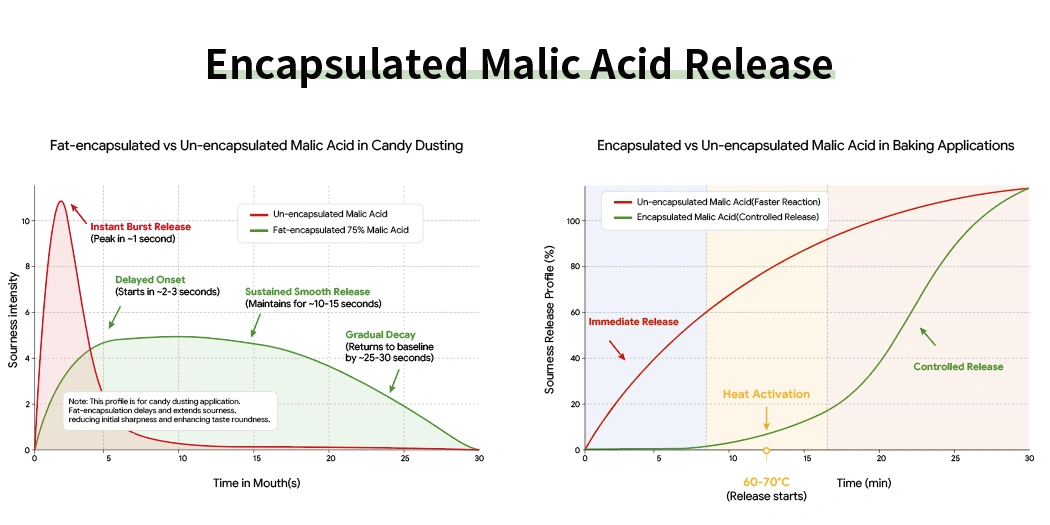
Depending on the specific encapsulation technology, the acid is only released when triggered by mechanical breakdown (chewing) or specific temperatures. This mechanism provides:
- Improved Moisture Stability: Blocks direct contact between the acid and the candy surface, keeping sanding sugars dry.
- Better Texture Protection: Minimizes premature acid interaction with the candy’s structural polymers.
- Greater Formulation Flexibility: Allows manufacturers to significantly increase sour intensity without altering the base recipe.
Creating a Layered Sour System: Malic vs Citric Acid
In premium sour confectionery, malic acid and citric acid are not simply alternatives to each other; they are combined to create a dynamic, balanced flavor profile.
Citric acid provides a rapid, sharp sour sensation. It creates the immediate acidic punch consumers expect when they first bite into a sour gummy.
Malic acid delivers a smoother, more persistent sensory experience. Its sourness develops gradually and lingers on the palate.
Because of these different release characteristics, formulators frequently combine encapsulated citric acid and encapsulated malic acid to build a “layered sour system.” Citric provides the bright upfront impact, while malic extends the duration, resulting in a premium, multi-dimensional tart finish.
Applications in Modern Sour Confectionery
Encapsulated malic acid gives manufacturers precise control over sour intensity and release timing across various demanding formats.
Sour-Sanded Gummies
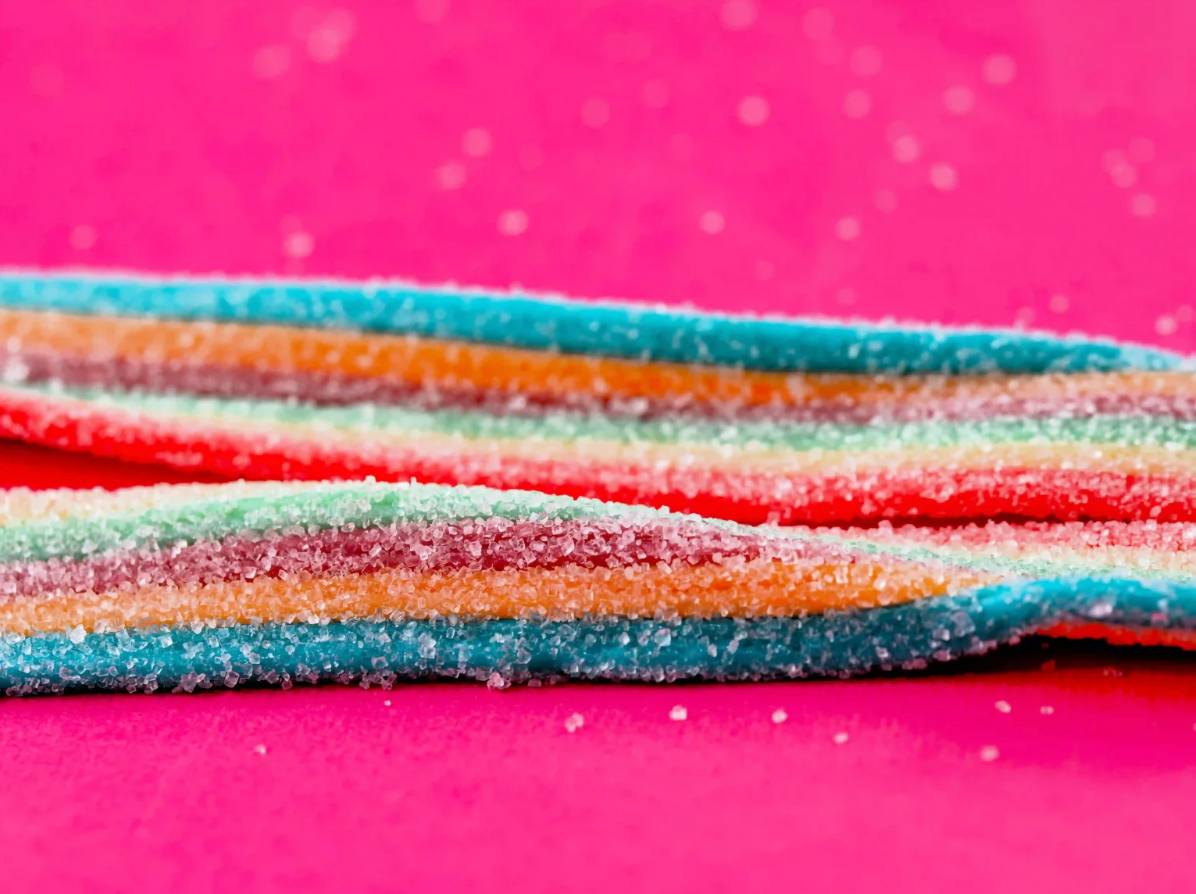
This is one of the most critical applications. Gummies rely on an external coating of sugar and acid for an immediate sensory hit. Encapsulated malic acid is essential here to maintain the separation between the acidulant and the gummy surface. It prevents the external coating from pulling moisture out of the gummy, ensuring the sanding mixture remains dry, free-flowing, and visually appealing throughout its shelf life, even in humid climates.
Extreme-Sour Hard Candies
Extreme-sour hard candies require an intense sour impact followed by a strong lingering sensation. Traditional acidulants often interact with the candy system too early during high-temperature boiling, affecting flavor balance. Encapsulated malic acid protects the acidulant during the intense heat of processing, ensuring the full acidic payload is preserved and delivered only when the consumer consumes the candy.
Sour Extruded Belts and Ropes
These products contain flexible sugar, gelatin, or starch-based systems that require careful acidity control. If acid migrates too quickly into an extruded belt, it causes the flexible matrix to break down, resulting in a brittle or overly sticky texture. Using encapsulated malic acid in the dough or surface coating maintains the desired chewiness and flexibility while delivering a consistent, long-lasting sour flavor.
How to Select Encapsulated Malic Acid for Your Formula
Choosing the right acid system depends on your product format, processing conditions, and desired sensory profile.
| Application | Key Requirement | Recommended Acid System |
|---|---|---|
| Sour Gummies | Prevent sweating and maintain surface stability | Encapsulated Malic Acid + Encapsulated Citric Acid |
| Extreme Sour Hard Candy | Strong sour impact with extended duration | Layered acid release system |
| Sour Extruded Belts | Protect texture and control acid migration | Encapsulated Malic Acid-based system |
| Sour Coatings & Powders | Maintain dry, free-flowing powder blends | Encapsulated Acid Blend |
When evaluating suppliers, always consider the acid content, release profile, and particle size to ensure consistent flavor performance across production runs.
Conclusion
Encapsulated malic acid has become an indispensable tool for confectionery manufacturers developing modern, extreme-sour products. By controlling acid release and preventing moisture-related structural failures, it allows brands to push sensory boundaries while maintaining commercial shelf stability.
Rather than replacing other acidulants, encapsulated malic acid works best as part of a complete sour system. Niranbio supplies premium food-grade encapsulated malic and citric acid solutions designed to help manufacturers achieve reliable acid release control and customized, long-lasting sour profiles.
FAQs
Why does sour gummy candy become sticky during storage?
Sour gummy candy becomes sticky when highly hygroscopic free acids (like standard malic acid) absorb moisture and migrate into the candy surface. Encapsulated malic acid prevents this direct acid-moisture interaction, improving surface stability and extending shelf life.
What is the difference between encapsulated malic acid and regular malic acid?
Regular malic acid releases immediately when exposed to moisture, which can cause sugar inversion and gummy sweating. Encapsulated malic acid features a protective barrier that provides controlled release, making it much more suitable for demanding confectionery applications.
Can malic acid and citric acid be used together in sour candy?
Yes. In fact, it is an industry best practice. Combining them creates a layered sour profile: citric acid provides a fast, bright sour impact, while malic acid delivers a smoother, longer-lasting tart sensation.
How does encapsulated malic acid improve sour candy shelf life?
By effectively isolating the acid from the candy’s sugars and gelling agents, it prevents premature chemical reactions (like texture softening and moisture migration), ensuring the product maintains its intended appearance and chewiness during global distribution.