Encapsulated Baking Soda for Frozen Dough: Prevent Leavening Failure
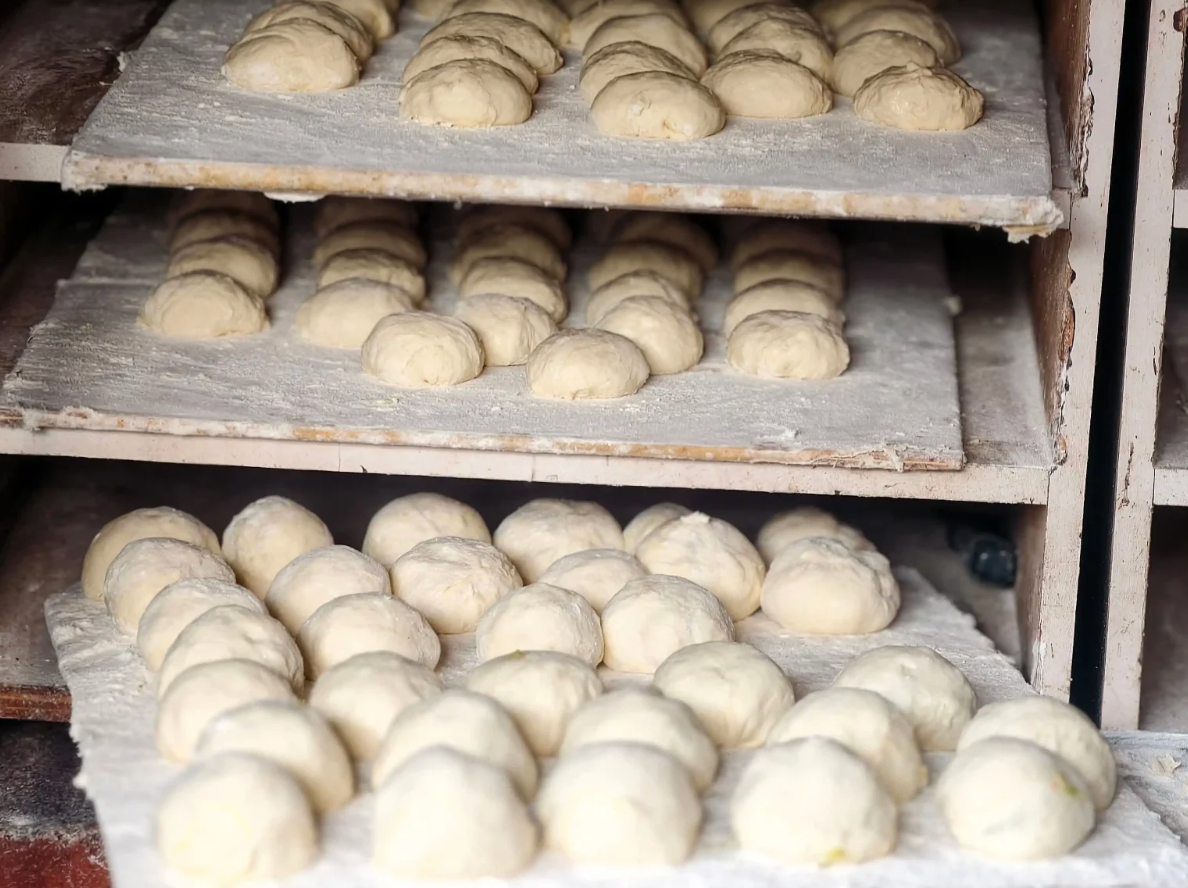
For frozen dough manufacturers, maintaining consistent baking performance after months of storage is one of the biggest formulation challenges. Products such as frozen pizza dough, frozen cookie dough, frozen bread rolls, frozen biscuits, and frozen pastries must deliver the exact same volume, texture, and appearance at the end of their shelf life as they do immediately after production.
However, standard baking soda loses a significant portion of its effectiveness during extended frozen storage. Moisture migration inside the dough matrix, freeze-thaw fluctuations, and premature reactions with acidic ingredients deplete available leavening capacity long before the product reaches the oven.
Encapsulated baking soda provides a controlled-release solution. By physically protecting the sodium bicarbonate during frozen storage, it ensures the leavening agent reacts only at the baking stage when gas generation is actually needed. This technology enables frozen dough manufacturers to lock in consistency, extend frozen shelf life, and eliminate the risk of uneven baking performance.
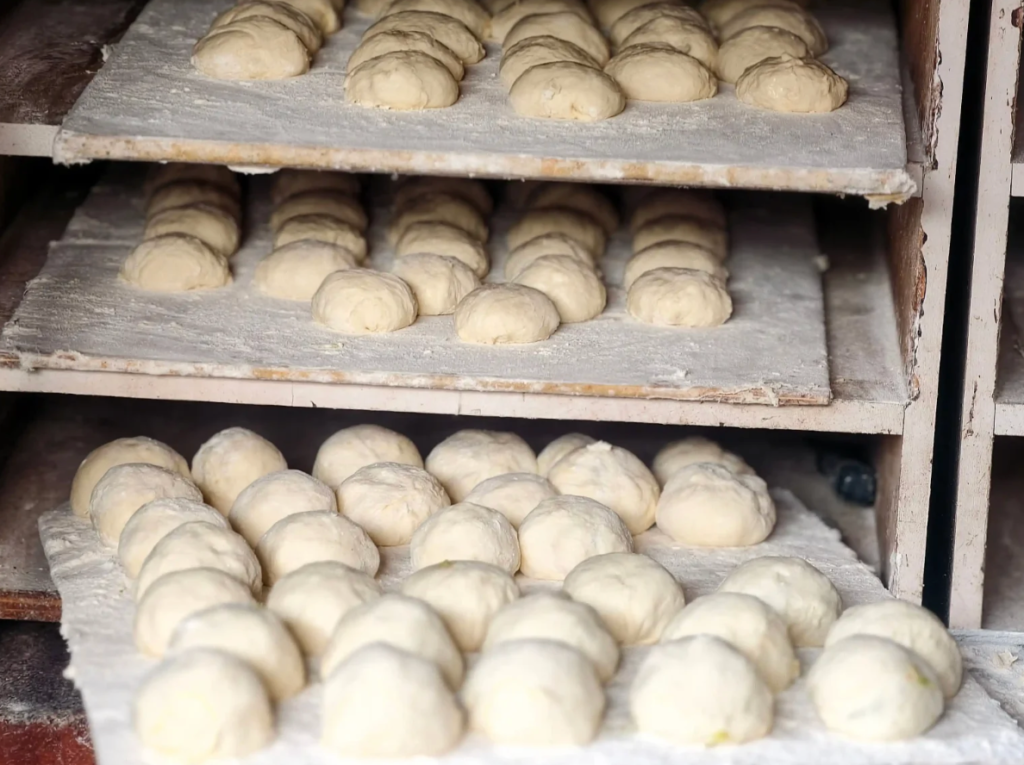
Why Frozen Dough Loses Leavening Performance
Frozen dough systems are designed to remain stable for weeks or months before final baking. During this period, however, the ingredients inside the dough continue to interact at a micro-level.
Baking soda (sodium bicarbonate) creates the expansion required for a light, properly structured crumb by reacting with acids and heat to generate carbon dioxide. In frozen dough applications, this reactivity becomes a major defect if the reaction triggers too early.
Even under frozen conditions, dough contains a certain amount of mobile free moisture. Over extended storage periods—especially when products experience temperature fluctuations during transportation or retail display—this moisture interacts with unprotected baking soda.
This degradation is invisible during storage. The frozen dough appears perfectly normal leaving the production facility, but the reduced leavening capacity becomes glaringly apparent after baking, resulting in flat volume, dense textures, and commercial rejection.
The Role of Encapsulated Baking Soda
The core function of encapsulated baking soda is to completely isolate the sodium bicarbonate core from the surrounding dough environment until the thermal processing stage.
During mixing, frozen storage, and handling, the protective micro-coating prevents direct contact between the baking soda and any moisture or acidic components. This barrier preserves 100% of the leavening agent’s stability throughout the product’s frozen shelf life.
During baking, the encapsulation coating melts under specific oven temperatures, releasing the sodium bicarbonate precisely when the dough structure is ready to expand. This controlled release mechanism ensures that carbon dioxide generation occurs in the oven, rather than being wasted during mixing or transit.
For manufacturers managing complex global distribution cycles, this exact reaction timing guarantees absolute consistency between production batches and the consumer’s final baked result.
Standard Baking Soda vs. Encapsulated Baking Soda
| Performance Factor | Standard Baking Soda | Encapsulated Baking Soda |
|---|---|---|
| Moisture Protection | Direct exposure to dough moisture; highly vulnerable. | Protective barrier prevents moisture interaction. |
| Frozen Storage Stability | Leavening power degrades continuously during extended storage. | Preserves full leavening capacity for months. |
| Reaction Timing | Reacts prematurely during mixing and bench time. | Controlled release triggers strictly during baking. |
| Baking Consistency | Performance varies wildly based on storage conditions. | Delivers uniform volume and texture in every batch. |
| Application Suitability | Limited to fresh or short-shelf-life goods. | Ideal for long-haul frozen dough and batter systems. |
Key Applications in Frozen Dough Products
Frozen Pizza Dough
Frozen pizza dough is one of the most demanding applications for leavening stability. Manufacturers supplying retail frozen pizza and food service programs require consistent, aggressive crust expansion after months of frozen storage. Encapsulated baking soda prevents premature reactions with the acidic components typical in pizza formulations, guaranteeing predictable oven spring and an open, airy crust structure.
Frozen Cookie Dough
In cookie production, even minor deviations in leavening drastically alter the final spread and texture. Exhausted baking soda leads to cookies with poor spread control and a dense, heavy bite. By delaying sodium bicarbonate availability until baking, encapsulation allows manufacturers to lock in the exact spread diameter and chewiness throughout the product’s entire frozen lifespan.
Frozen Bread Rolls & Biscuits
Restaurants, bakeries, and food service operators demand frozen rolls and biscuits that bake up tall, soft, and visually flawless—regardless of how long they’ve been in the freezer. Encapsulated baking soda ensures reliable volume development and a tender internal crumb by completely halting premature acid-base reactions during freezing and thawing cycles.
Frozen Pastries
Pastries rely on complex formulations of fats, sugars, and acids. Maintaining controlled gas release is critical for achieving delicate flakiness and volume. Encapsulated baking soda provides the thermal-triggered release necessary to push the pastry layers apart exactly when the fat melts in the oven.
Building a Complete Encapsulated Leavening System
For many standard frozen doughs, protecting only the baking soda is sufficient. However, premium or highly acidic formulations require total control over both sides of the leavening equation.
In these cases, an encapsulated leavening system provides the ultimate structural insurance by combining encapsulated sodium bicarbonate with encapsulated leavening acids.
For maximum freeze-thaw stability, formulators frequently pair our encapsulated baking soda with encapsulated citric acid or encapsulated malic acid. By protecting both the acid and the base separately, manufacturers entirely eliminate premature reactions during mixing and storage, yielding explosive, perfectly timed carbon dioxide release in the oven.
Key Considerations When Sourcing Encapsulated Baking Soda
When evaluating suppliers for your frozen dough applications, look beyond basic pricing and assess these critical technical parameters:
| Evaluation Factor | Why It Matters |
|---|---|
| Coating Technology / Melt Point | Determines exactly when the core releases during baking. Must align with your specific oven profile. |
| Active Bicarbonate Content | Crucial for accurate dosage calculations (typically 50% – 85% active). |
| Particle Size Distribution (PSD) | Ensures even dispersion in the dough matrix without creating localized “hot spots” of gas. |
| Freeze-Thaw Stability Data | Verifies the coating will not crack or fail during temperature fluctuations in the supply chain. |
Optimize Your Frozen Dough Production Today
For frozen dough producers, inconsistent leavening directly damages customer trust and brand reputation. Stop losing product volume to premature reactions and moisture migration.
By upgrading to Niranbio’s premium encapsulated baking soda, you can extend your frozen shelf life, eliminate batch-to-batch variation, and guarantee a perfect bake for your end-users every single time.
Ready to stabilize your frozen formulations? Contact our technical sourcing team today to request precise product specifications, application guidelines, and standard laboratory samples for your R&D trials.
FAQs
Why does frozen dough lose its ability to rise?
During extended frozen storage, mobile free moisture within the dough causes standard baking soda to react prematurely with acidic ingredients. This exhausts the leavening agent before baking, resulting in flat, dense finished products.
What does encapsulated baking soda do in frozen dough?
It physically isolates the sodium bicarbonate behind a protective, food-grade barrier. This prevents it from dissolving or reacting during storage, ensuring 100% of its leavening power is saved for the heat of the oven.
Can I replace regular baking soda with the encapsulated version at a 1:1 ratio?
No. Because the protective coating makes up a percentage of the total ingredient weight (e.g., a 70% active product), you must calculate your dosage based on the active sodium bicarbonate content. Always refer to your supplier’s Technical Data Sheet (TDS).
What is the difference between encapsulated baking soda and an encapsulated leavening system?
Encapsulated baking soda only protects the base (alkali). A complete encapsulated leavening system protects both the acid and the base, offering maximum control and stability for highly complex or long-shelf-life formulations.